
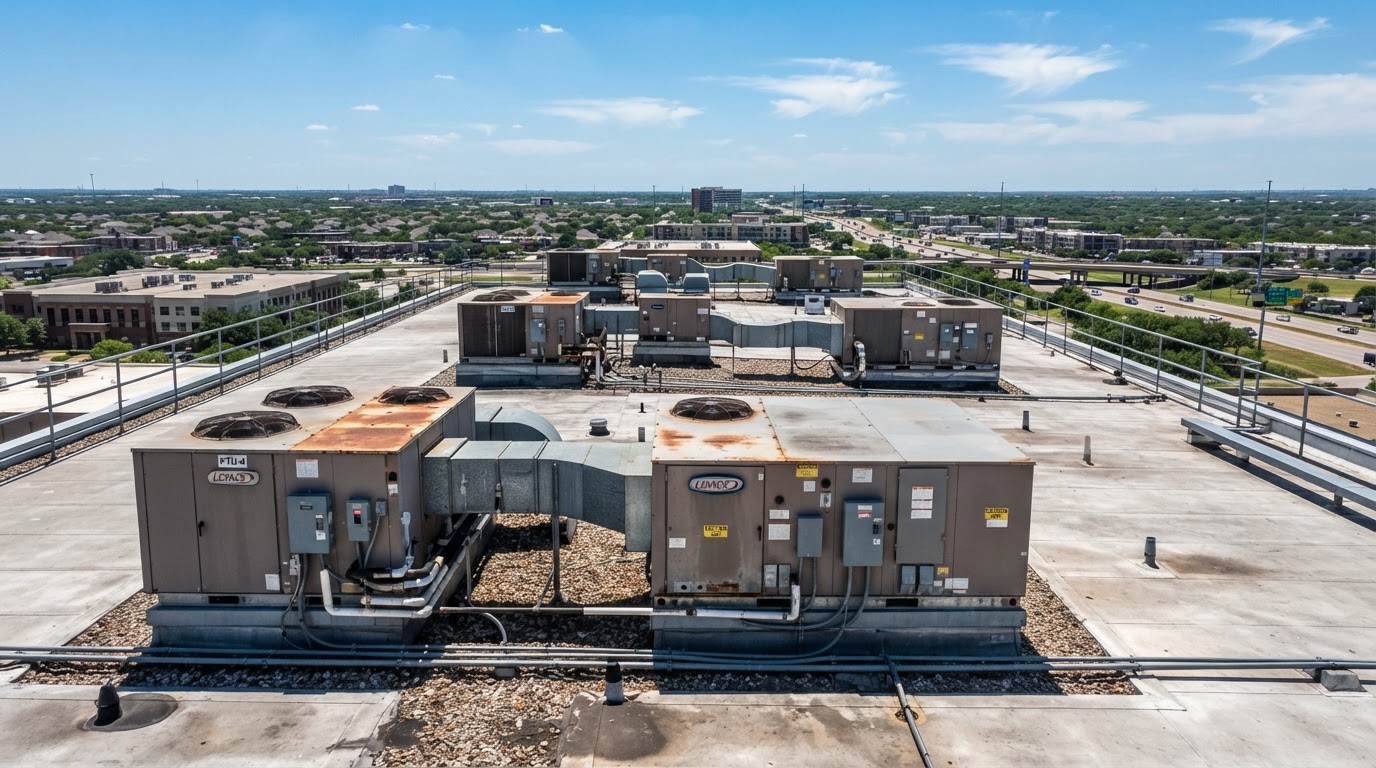
Heat load and HVAC lifecycle
North Texas heat runs HVAC systems hard for much of the year. That sustained load shortens component life and accelerates wear on filters, coils, belts, and compressors — which means the standard maintenance interval may not be enough for a heavily loaded building.
Maintenance scheduling should reflect the actual heat load of the property, not a generic calendar. A building with heavy solar exposure or high internal load may need more frequent reviews.
Seasonal planning
Spring is the window to prepare cooling systems before peak demand. Late summer is when deferred issues surface as failures. Fall is the envelope and drainage review before severe weather season. Winter is the lower-load window for planned replacements.
Mapping maintenance to these seasons keeps work proactive rather than reactive — and keeps the building ready for the conditions that actually stress it.
Documentation across seasons
Each seasonal review adds to the facility record. Over time, that documentation reveals patterns — which systems fail first, which repairs recur — and informs the long-term maintenance plan.
That history is what allows an owner to plan capital replacements deliberately instead of reacting to the next failure.