
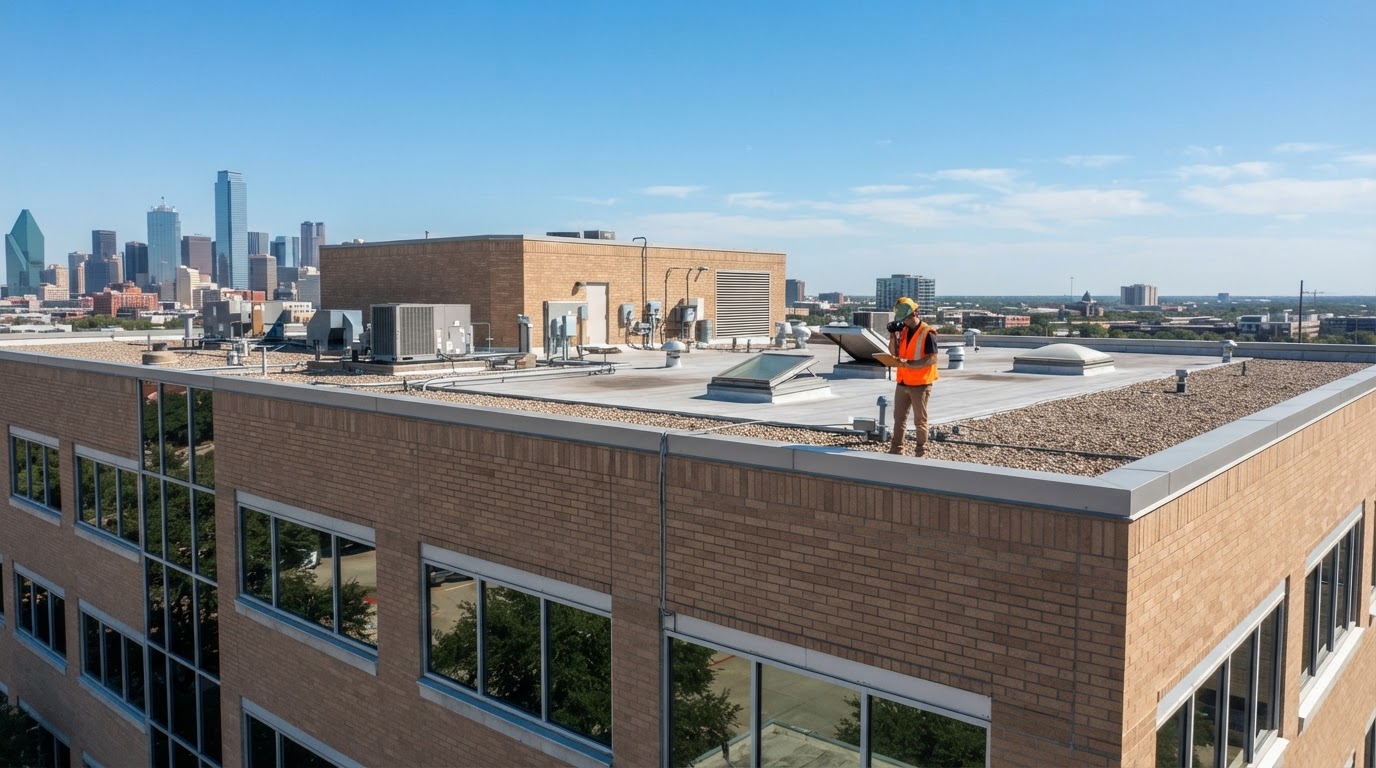
Why planned maintenance matters for DFW commercial buildings
North Texas commercial properties face a demanding combination of heat, severe weather, and steady occupancy. A planned maintenance program addresses mechanical, envelope, and grounds systems on a schedule rather than after a failure — which is almost always more disruptive and more expensive for an occupied building.
The goal is not activity for its own sake. It is documented visibility into facility conditions, so owners can prioritize work, budget realistically, and avoid the cascading failures that follow neglected systems.
The three systems that define a maintenance program
Mechanical systems — HVAC, plumbing, and electrical — carry the highest operational risk in a Texas commercial building. Heat load drives HVAC lifecycle hard, so filter changes, coil cleaning, and seasonal reviews should anchor the schedule.
Building envelope — roof, facade, windows, and seals — protects everything underneath. Envelope issues are slow and quiet until they are not; a recurring inspection catches them early.
Grounds and common areas affect safety, liability, and first impressions. Paving, drainage, lighting, and landscaping belong on the same maintenance calendar as the mechanical systems.
Structuring the program
A workable program starts with a condition assessment, builds a recurring review cadence, and documents every finding. Repairs are tracked, corrective actions are planned, and trades are coordinated through a single point of contact.
For multi-building portfolios, consistency is the challenge — the same standards and documentation across properties of different ages and systems. That is where a single facility partner adds the most value.