
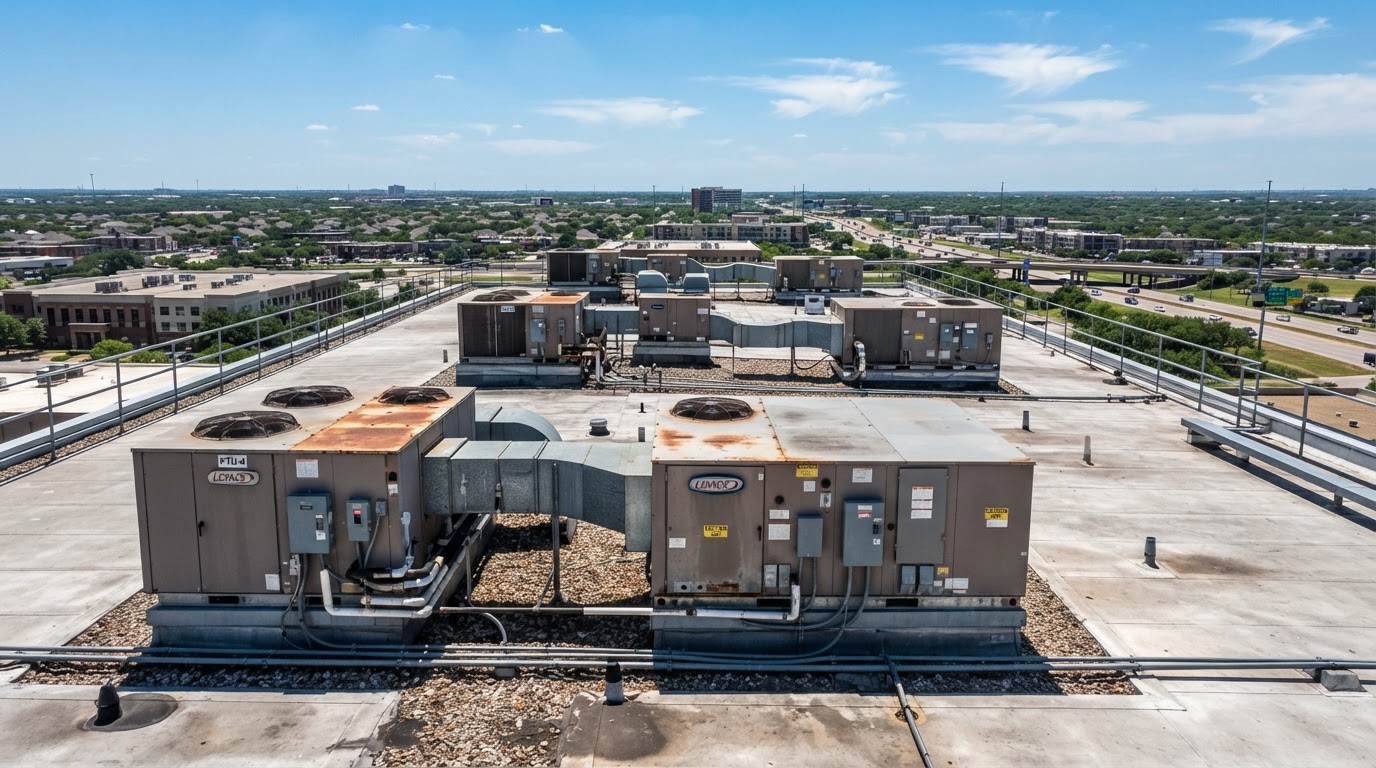
Reactive vs. preventive maintenance
Reactive maintenance waits for a system to fail, then responds. Preventive maintenance reviews systems on a schedule and addresses wear before it becomes a failure. For a Dallas commercial property, the difference shows up in three places: tenant disruption, repair cost, and equipment lifespan.
A failed HVAC compressor in August is an emergency — it disrupts occupancy, costs more to resolve under time pressure, and often shortens the life of surrounding components. A scheduled review that catches the wear early avoids all three.
What a preventive program includes
Routine facility reviews establish a baseline and catch changes over time. Maintenance scheduling puts each system on a calendar appropriate to its load and age. Repair tracking and corrective-action planning turn findings into prioritized work rather than a forgotten list.
Vendor coordination ensures the right trade handles each item, and facility documentation keeps the record current — which matters for budgeting, compliance, and future planning.
Long-term planning, not just task lists
The highest-value output of a preventive program is the long-term maintenance plan: a documented view of each system's condition and expected life, so owners can plan replacements instead of reacting to them.
That plan is what separates a maintenance vendor from a facility partner. The partner carries the building's history forward and helps the owner spend deliberately.